Why Black blood donors matter to people living with sickle cell
Many warriors rely on regular transfusions, and the closest matches often come from donors of similar ancestry. Yet just under 1 per cent of Canada’s whole blood donors identify as Black.
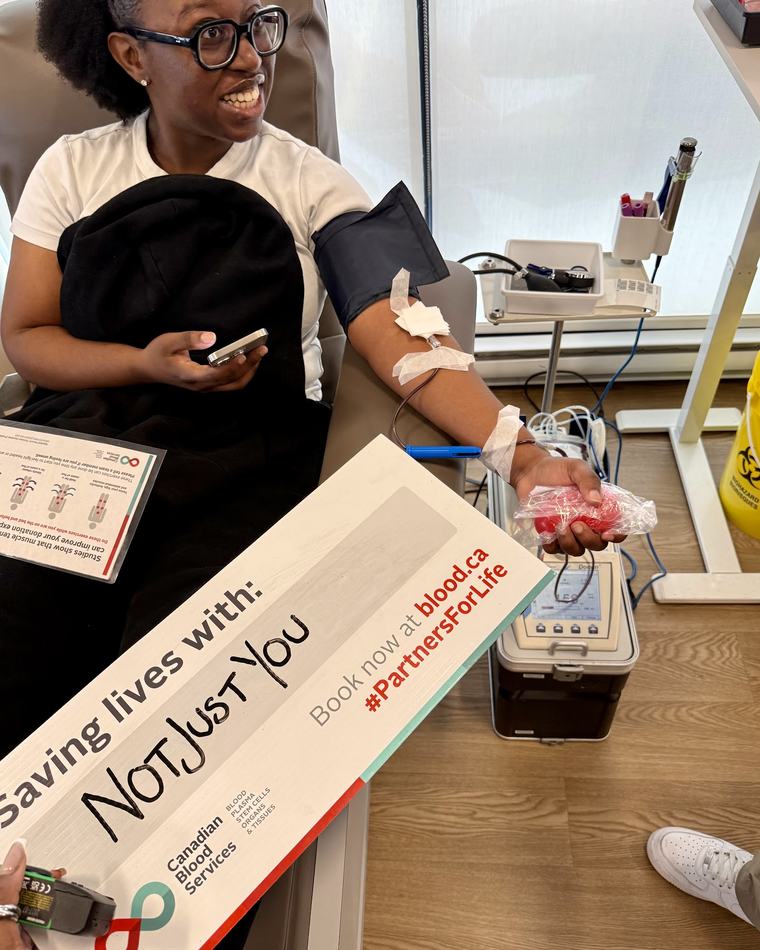
For many people living with sickle cell, donated blood is part of ongoing care. Some need only a single transfusion. Others need red cell exchanges every four to six weeks, for life, according to Canadian Blood Services. Each of those transfusions works best with the closest match possible.
Why transfusions matter in sickle cell care
Transfusions help treat and prevent some of the most serious complications of sickle cell disease. Care teams use them for severe anemia and acute chest syndrome, before surgery, and as regular treatment to lower the chance of stroke, including in children whose brain ultrasound screening shows a high risk.
In a red cell exchange, a patient’s sickled red cells are removed and replaced with donor cells. Canadian Blood Services says people who need regular exchanges use, on average, eight units of blood every four weeks.
Why a close match matters
Blood type goes far beyond A, B, AB and O. Red blood cells carry more than 300 inherited markers, called antigens. When a patient receives blood with markers their body does not recognize, their immune system can make antibodies against them, a process called alloimmunization.
Compared with other transfusion recipients, people with sickle cell disease are 10 times more likely to develop these antibodies, Canadian Blood Services reports. Each new antibody makes compatible blood harder to find for the next transfusion.
Because antigens are inherited, the closest matches are most often found among donors of similar ancestry. Canadian Blood Services names the C, E and K antigens as the most important to match for people with sickle cell, followed by the Duffy and Kidd blood groups. Some rare types, such as U negative, are found only in people from African, Caribbean and Black communities.
The gap in Canada’s donor base
As of 2025, just under 1 per cent of Canada’s whole blood donors identify as Black, compared with 4.3 per cent of the population in 2021, according to Canadian Blood Services. Some barriers are real: waiting periods after time in malaria-risk regions, and minimum hemoglobin levels, affect many would-be donors from Black communities. Canadian Blood Services has said it is working to reduce these barriers, including plans to add a malaria test to donor screening.
Bill S-201, which passed the Senate in November 2025 and is now before the House of Commons, would require a national framework on sickle cell disease that includes measures to promote blood donation and a diverse blood supply. Learn about Bill S-201.
How NotJustYou gives as a team
NotJustYou donates as a team through Partners for Life, Canadian Blood Services’ program for groups that give together. Members can book on a group donation day or give on their own time, and every donation made under the team name counts toward our shared goal.
We held group donations in 2024 and during Sickle Cell Awareness Month 2025, and the number of people registering for our group donations doubled from 2024 to 2025. In January, The Afro-Jazz Experience opened a three-part initiative with Canadian Blood Services. It continues with a national digital campaign of donor and recipient stories and our first Black History Month group donation, on Saturday, February 21, at a Canadian Blood Services donor centre in Edmonton.
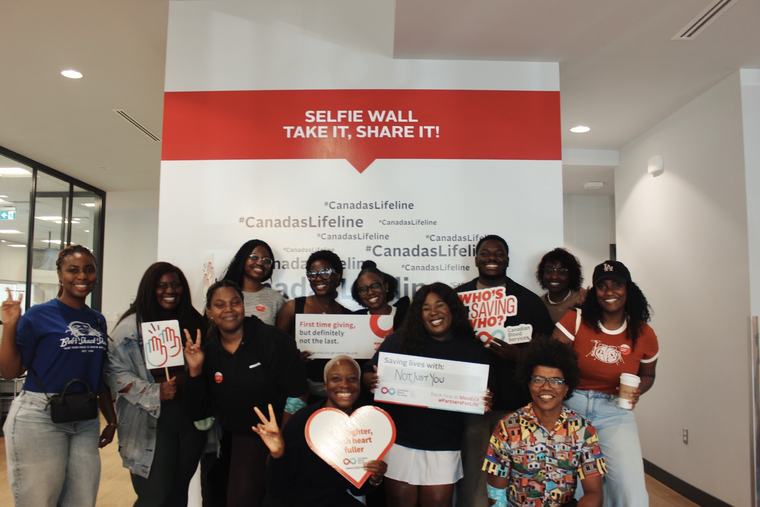
Update: Our first Black History Month Group Blood Donation took place on February 21, 2026. Read the recap.
How to book
- Check your eligibility and book at blood.ca, in the GiveBlood app or by calling 1 888 2 DONATE (1-888-236-6283). In Quebec, blood donation is run by Héma-Québec.
- To give with us, join the NotJustYou team in your donor account so your donation counts toward our goal. Here is how to give with NJY.
- Canadian Blood Services accepts blood donors from age 17, and people with sickle cell trait are eligible and encouraged to give.
- Plan for about an hour at the donor centre. The donation itself takes 5 to 10 minutes. Drink fluids and eat a salty snack beforehand.
Sources
- Canadian Blood Services, Sickle cell disease and blood donation
- Canadian Blood Services, Ongoing efforts to build a more inclusive blood system for African, Caribbean, and Black communities
- Canadian Blood Services, Partners for Life: group donations and pledge-based partnerships
- Canadian Blood Services, How donating blood works
- National Heart, Lung, and Blood Institute (NIH), Sickle cell disease treatment
- Parliament of Canada, LEGISinfo: Bill S-201, National Framework on Sickle Cell Disease Act
This article is general information, not medical advice. Talk to your own hematology team about your care. In an emergency, call 911.
More from the SS Feed
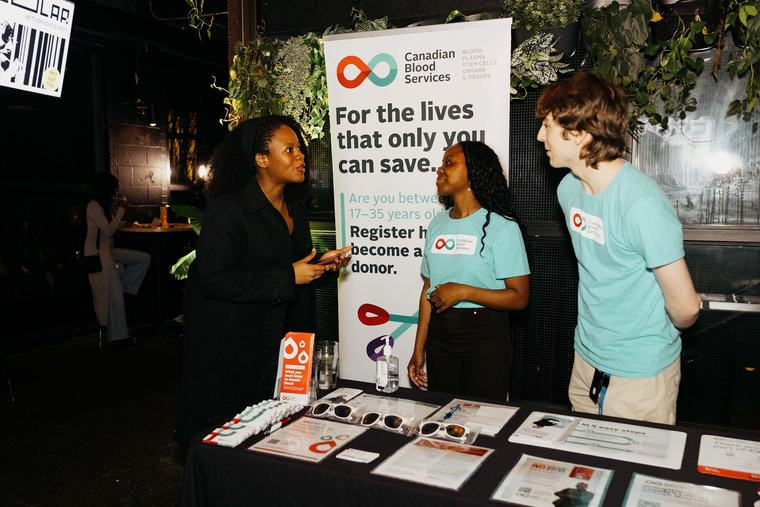
DonationOct 16, 20263 min read
How Canadian Blood Services and NotJustYou work together for people with sickle cell
Registry drives, group donations and a shared goal: a donor base as diverse as the people who need it.
DonationMar 5, 20262 min read
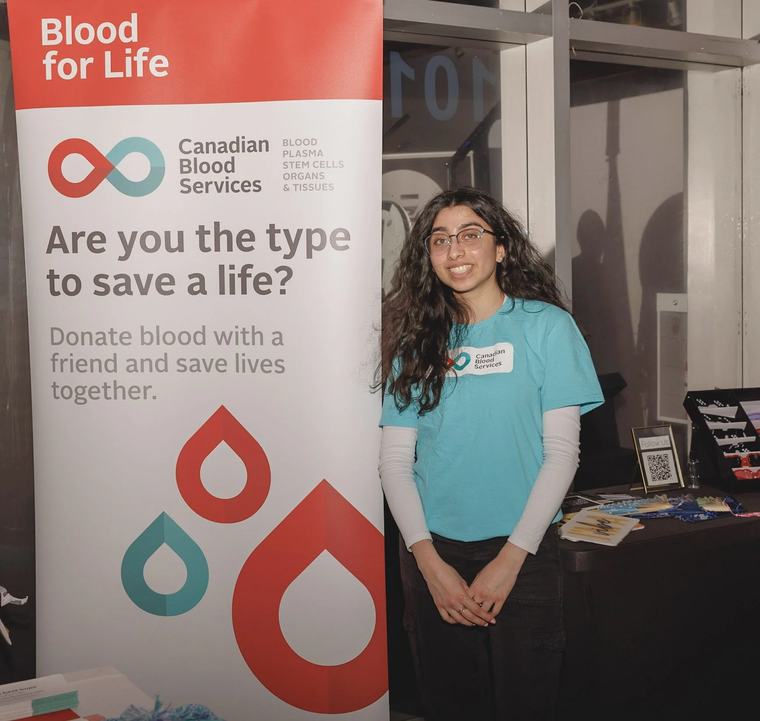
How to join Canada’s stem cell registry, and why Black donors matter
A cheek swab today could be someone’s cure. One Cellular sign-up has already become a match.
Mental HealthOct 15, 20262 min read
Free therapy for Cells members: inside our partnership with Bethesda Therapy
People in Cells and their caregivers can get up to 24 fully subsidized sessions with Bethesda Therapy’s licensed therapists.