Caring for someone with sickle cell without losing yourself
Burnout builds quietly when one person carries every crisis. How to spot the signs, share the load and plan for crisis days, inspired by this year’s Cells for Caregivers meetings.

Caring for someone with sickle cell can mean living on alert: a fever late at night, an unplanned hospital stay, a shift you have to leave early. This year, Cells for Caregivers met to talk about how caregiving changes relationships (April 13) and how to prepare for crisis days (July 13). This guide draws on the themes of those sessions.
The invisible load
Much of caregiving never appears on a calendar. It is watching for the early signs of a crisis, tracking appointments and prescriptions, explaining sickle cell to teachers and employers, and staying calm for everyone else.
Caregiving can also change relationships: between partners, between a parent and the child who is unwell, and with brothers and sisters who may feel overlooked. Over time, the strain adds up.
Signs of burnout to watch for
As Patience, a caregiver of two children with sickle cell, has said, “you tend to go in a very, very dark place if you don’t take care of your mental health.” Burnout rarely arrives all at once, so watch for:
- Feeling tired most of the time, even after rest
- Sleeping too much or too little
- Getting irritated or angry more easily
- Losing interest in things you used to enjoy
- Feeling sad or hopeless
- Frequent headaches, aches or other health problems
- Missing your own medical appointments
- Relying more on alcohol or other substances
If several of these sound familiar, treat them as a signal to change how the load is shared. Burnout is not a personal failing. It is what happens when one person carries too much for too long.
Share the load
It takes a village.
No single person can cover every crisis, appointment and hard conversation. Sharing the work protects your health and gives the person you care for a wider circle of people who understand their needs.
- Write down the jobs you do, big and small, and let others choose one: school pickups, pharmacy runs, meals, laundry or sitting in on appointments
- Ask a relative or friend to take a night at the hospital so you can sleep at home
- Give siblings roles that suit their age, and protect time with them on calm days
- As the person you care for grows, help them take on parts of their own care and build their own circle of support
Build a crisis-day plan before you need it
Crisis days go more smoothly when decisions are made on calm days and the work does not all sit with one person. Write the plan down, share it with everyone named in it, and keep a copy on your phone. A good plan answers:
- Who goes to the hospital, and who covers home, siblings and meals
- Who calls school or work, and who updates family so you are not answering every message
- Where to find the care plan from the hematology team, a current medication list, the health card and key phone numbers
- What goes in the hospital bag: chargers, a warm layer, comfortable clothes, snacks and something to pass the time
- How the adults will take turns overnight
Follow the hematology team’s advice on when to go to hospital, and make sure everyone on the plan knows that a fever is always an emergency with sickle cell. Our Bright Boxes, care packages curated by our founder and by warriors, were made for hospital stays and crisis days.
Support for you, too
Cells meets online on the last Monday of each month, from 6 to 7 PM ABT (Alberta Time), and Cells for Caregivers meetings are dedicated to the people doing the caring. Caregivers living in Canada who are registered in Cells and attend at least one Cells meeting per quarter can also access free therapy through our partnership with Bethesda Therapy: up to 24 fully subsidized, 60-minute virtual sessions. NotJustYou only receives anonymous totals.
Questions people ask
Yes. Many caregivers feel both, sometimes on the same day. These feelings are a sign of strain, and talking them through with a therapist or with other caregivers can help.
Yes. Caregivers living in Canada who are registered in Cells and attend at least one Cells meeting per quarter can access up to 24 fully subsidized virtual sessions with Bethesda Therapy.
Who goes to hospital, who covers home and siblings, who updates school, work and family, where the care plan and medication list are kept, and what goes in the hospital bag. Share it with everyone named in it.
This article is general information, not medical advice. Talk to your own hematology team about your care. In an emergency, call 911.
More from the SS Feed

Mental HealthOct 15, 20262 min read
Free therapy for Cells members: inside our partnership with Bethesda Therapy
People in Cells and their caregivers can get up to 24 fully subsidized sessions with Bethesda Therapy’s licensed therapists.

Mental HealthMay 14, 20262 min read
Sickle cell and mental health: you are not imagining it
Chronic pain wears on the mind. Anxiety, low mood and isolation are common, and support helps.
DonationOct 16, 20263 min read
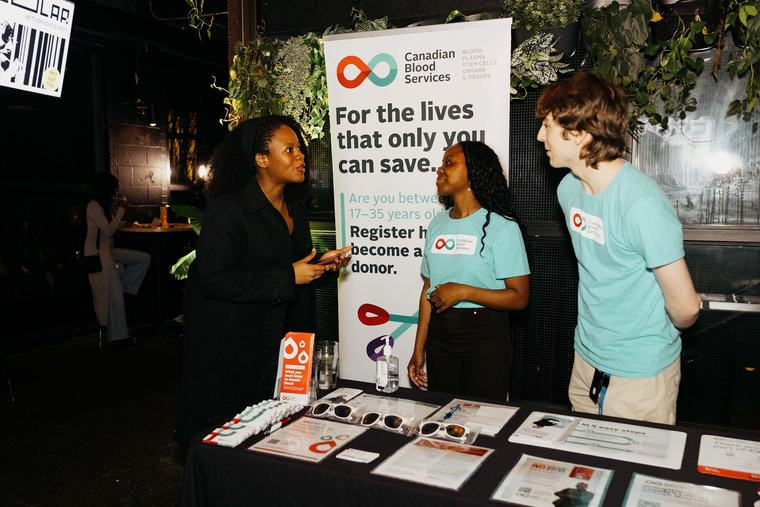
How Canadian Blood Services and NotJustYou work together for people with sickle cell
Registry drives, group donations and a shared goal: a donor base as diverse as the people who need it.