Gene therapy for sickle cell in Canada: what Casgevy is and where access stands
In its main trial, Casgevy kept nearly everyone free of severe crises for at least a year. How it works, what treatment involves and why access in Canada is still limited.

The established cure for sickle cell has long been a stem cell transplant from a donor. Casgevy, also known as exa-cel (exagamglogene autotemcel), instead uses a person’s own stem cells, edited in a lab. It is a major advance, but it is intensive, costly and not right for everyone.
How Casgevy works
Babies make fetal hemoglobin, which does not sickle, until a gene called BCL11A helps switch it off in the months after birth, leaving adult hemoglobin, the form that sickles. Casgevy uses CRISPR/Cas9 gene editing on a person’s own blood stem cells so that BCL11A is turned down in the cells that become red blood cells. Those cells then make high levels of fetal hemoglobin, which helps keep them from sickling. Because the cells are the patient’s own, no donor match is needed and graft-versus-host disease is not a concern.
What Health Canada and CDA-AMC decided
Health Canada authorized Casgevy on September 23, 2024, for people 12 and older with sickle cell disease and recurrent vaso-occlusive crises (pain crises caused by blocked blood vessels). Vertex, which makes it, announced the decision two days later and estimated that about 2,000 people in Canada are eligible, most of them living with sickle cell.
In January 2025, Canada’s Drug Agency (CDA-AMC) recommended that public drug plans cover it only if certain conditions are met. CDA-AMC advises every province and territory except Quebec, which runs its own review, and its recommendations are not binding. The main conditions are:
- Age 12 or older, with no upper age limit
- A severe genotype: HbSS, HbS beta zero thalassemia or HbS beta plus thalassemia (HbSC is not included)
- At least two severe vaso-occlusive crises a year in each of the past two years
- Well enough for a transplant using one’s own stem cells
- No fully matched relative who is available and willing to donate
- Prescribed by a hematologist with sickle cell expertise, as a one-time treatment
- A price reduction of at least 39 percent
Why access is still limited
The pan-Canadian Pharmaceutical Alliance, which negotiates drug prices for public plans, opened talks with Vertex in July 2025, and its records show them still under way as of this writing. After any deal, each province and territory decides whether and how to fund it. Casgevy can also only be given at centres experienced in stem cell transplantation, and CDA-AMC flagged limited capacity as a barrier, so some people may need to stay near a centre for weeks or months.
What treatment involves
Casgevy is given once, but the process takes many months. The main steps are:
- Preparation: hydroxyurea is stopped, and regular red blood cell transfusions, for at least eight weeks in the trials, lower sickle hemoglobin.
- Collection: a medicine moves stem cells into the blood, where a machine collects them. Some people need more than one round.
- Editing: the cells are edited and tested at a manufacturing site over several months.
- Conditioning: in hospital, high-dose chemotherapy (busulfan) clears the bone marrow.
- Infusion and recovery: the edited cells are infused, followed by about a month in hospital and months of recovery.
- Follow-up: checks at least once a year for 15 years.
The chemotherapy carries a high risk of infertility, so discuss fertility preservation, such as freezing eggs or sperm, and whether it is covered, before treatment begins. Effective birth control is advised from the start of stem cell collection until at least six months after the infusion.
What the evidence shows
In the main clinical trial, 29 of the 30 people assessed had no severe vaso-occlusive crises for at least 12 months in a row. Health Canada judged that the benefits outweigh the risks.
The trial was small, had no comparison group and has limited long-term follow-up. Most serious side effects came from the chemotherapy, and possible long-term risks of gene editing, such as blood cancers, are still being monitored, although none were reported in the trials.
Questions to ask your hematologist
- Do I meet the CDA-AMC conditions, and is funding available where I live?
- If a relative is a match, how would a transplant compare?
- Which centre would treat me, and for how long?
- What are my fertility preservation options?
To compare options, read our explainers on hydroxyurea and stem cell transplant. Access to and coverage of treatments is also part of Bill S-201, the proposed national framework on sickle cell disease, now at committee stage in the House of Commons; see our advocacy page.
Questions people ask
It is given once, and nearly everyone in the main trial was free of severe crises for at least a year. With limited long-term follow-up, it is too early to say how long the effect lasts.
Not under Health Canada’s current authorization. The United States extended approval to children as young as 2 in July 2026, but Canada would need its own decision.
Sources
- Health Canada, Summary Basis of Decision: Casgevy
- Health Canada, Regulatory Decision Summary: Casgevy
- Vertex Pharmaceuticals (Canada), news release, September 25, 2024
- Canada’s Drug Agency (CDA-AMC), Casgevy reimbursement recommendation, January 2025
- Health Canada, Casgevy product monograph
- Pan-Canadian Pharmaceutical Alliance, negotiation records
- US Food and Drug Administration, news release, July 1, 2026
This article is general information, not medical advice. Talk to your own hematology team about your care. In an emergency, call 911.
More from the SS Feed
TreatmentSep 8, 20264 min read
Stem cell transplant for sickle cell: how the cure works and who it is for
A transplant replaces the bone marrow that makes sickled cells. It can cure sickle cell, carries serious risks and depends on finding a match, which is where donors come in.

TreatmentAug 20, 20264 min read
Hydroxyurea for sickle cell: how it works and what to expect
The daily medicine has been studied in sickle cell for decades. What it can reduce, who is offered it, why it needs regular blood tests and why it takes months to work.
DonationOct 16, 20263 min read
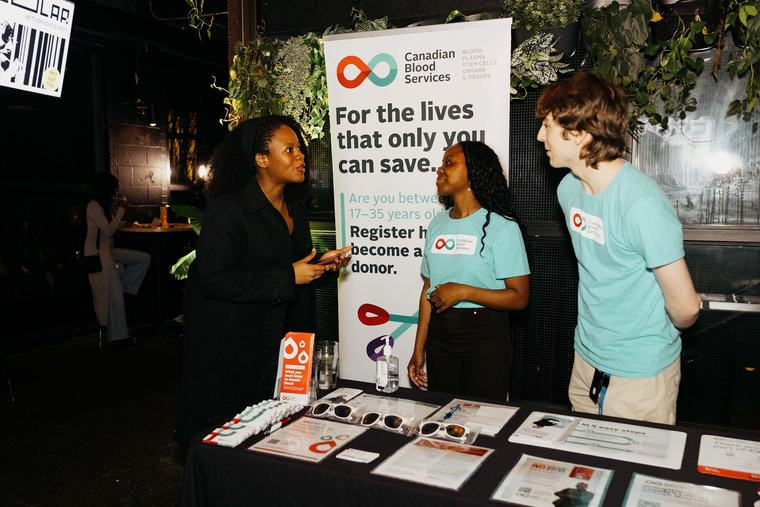
How Canadian Blood Services and NotJustYou work together for people with sickle cell
Registry drives, group donations and a shared goal: a donor base as diverse as the people who need it.