Stem cell transplant for sickle cell: how the cure works and who it is for
A transplant replaces the bone marrow that makes sickled cells. It can cure sickle cell, carries serious risks and depends on finding a match, which is where donors come in.
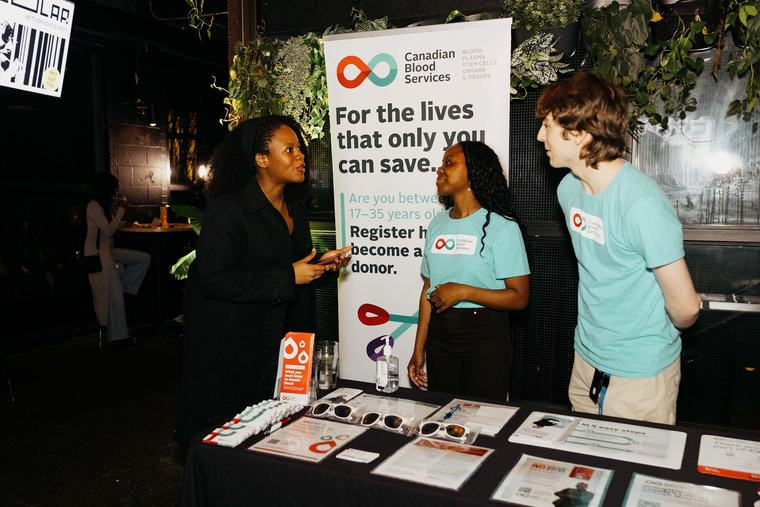
A stem cell transplant, often called a bone marrow transplant, is the established cure for sickle cell disease. NotJustYou’s founder, Ufuoma Muwhen, was cured by a reduced-intensity transplant at the Alberta Children’s Hospital in Calgary, just after her 18th birthday. It is a demanding treatment with serious risks, and it is not right for everyone.
How a transplant works
Blood cells are made by stem cells in the bone marrow. In sickle cell, those stem cells carry the sickle hemoglobin gene, so the marrow keeps producing red blood cells that can sickle. A transplant replaces them with healthy stem cells from a donor, and the new marrow makes red blood cells that do not sickle.
The donor’s cells are collected from their blood or bone marrow and given to the patient through an intravenous line, much like a transfusion. Over the following weeks, they settle in the marrow and begin making new blood cells.
Why the donor matters
Donor and patient need closely matching tissue types, called HLA markers, which are inherited from both parents. Each full brother or sister has a one in four chance of being a match, and results are best with a fully matched sibling donor.
Most warriors do not have one. Canadian clinical experts consulted by Canada’s Drug Agency estimated that only about 10 percent of their patients have a matched related donor. Transplants from unrelated or half-matched donors are possible, but they carry higher risks in sickle cell, and American Society of Hematology (ASH) guidelines suggest offering them within clinical trials.
What conditioning involves
Before the transplant, the patient receives conditioning: chemotherapy, sometimes with radiation or other medicines, to make room in the marrow and weaken the immune system so it does not reject the donor’s cells. Higher-intensity conditioning is harder on the body. Reduced-intensity approaches, like the one Ufuoma received, are gentler and have helped open transplant to some adults, though they can carry a higher risk that the new cells do not take hold.
Patients stay in hospital for several weeks, then need close follow-up for months, with frequent blood tests and medicines that keep the immune system in check. Full recovery of the immune system can take a year or more.
The main risks
A transplant can cure sickle cell, but it can also cause serious harm. Your team will explain your own risks, which include:
- Infection, because the immune system is very weak for months
- Graft-versus-host disease, when the donor’s immune cells attack the patient’s organs and tissues. It can be mild or severe, short-term or long-lasting.
- Graft failure, when the donor cells do not take hold and sickle cell returns
- Infertility, mainly from the chemotherapy, so fertility preservation should be discussed before treatment
- Seizures, organ damage, a higher risk of some cancers later in life, and death, a risk that is higher in adults than in children
Who is usually considered
Most transplants for sickle cell have been done in children, and outcomes are generally better at younger ages. ASH guidelines suggest considering transplant, especially from a matched sibling, for people who have had a stroke or are at high risk of one, and for those with frequent pain crises or repeated acute chest syndrome.
Adults can be candidates too, at specialized centres, after weighing their health, donor options and goals. Three Sickle Stories come from warriors who have been through transplant: Ufuoma’s story, Revée’s story and Osasere’s story. Revée is among the first adults in Canada to be cured of sickle cell through a stem cell transplant.
How the registry helps
For patients without a matched relative, a stranger on a registry can be the match. Outside Quebec, Canadian Blood Services’ Stem Cell Registry looks for healthy donors aged 17 to 35. In Quebec, Héma-Québec runs the registry and accepts donors aged 18 to 35.
Joining starts online, and Canadian Blood Services mails a cheek swab kit to new registrants. Because HLA markers are inherited, patients are most likely to match donors of similar ancestry, yet Canadian Blood Services reports that Black, Indigenous, Asian, Hispanic and mixed-heritage donors together make up only about a third of its registrants. Learn how to join the registry.
Questions people ask
No. Many people are cured, especially children with a matched sibling donor, but a transplant can fail and complications can be serious or life-threatening.
Often, yes, if they are a match. A sibling with the trait, but not the disease, can usually donate, and research has found long-term results similar to those from donors without the trait.
A transplant uses a donor’s stem cells. Gene therapy uses your own stem cells, modified in a lab, so no donor is needed, although it still requires intensive chemotherapy.
Sources
- National Heart, Lung, and Blood Institute, Sickle cell disease treatment
- American Society of Hematology, 2021 sickle cell transplant guidelines
- HealthLinkBC, Stem cell transplant for sickle cell disease
- Canada’s Drug Agency (CDA-AMC), Casgevy reimbursement recommendation, January 2025
- Canadian Blood Services, Ethnic diversity and stem cell donation
- Canadian Blood Services, Stem Cells for Life
- Héma-Québec, Who can give stem cells
- Limerick E, Fitzhugh C. Journal of Clinical Medicine, 2019
- Stenger E, et al. Blood, 2023
This article is general information, not medical advice. Talk to your own hematology team about your care. In an emergency, call 911.
More from the SS Feed

TreatmentSep 24, 20264 min read
Gene therapy for sickle cell in Canada: what Casgevy is and where access stands
In its main trial, Casgevy kept nearly everyone free of severe crises for at least a year. How it works, what treatment involves and why access in Canada is still limited.

TreatmentAug 20, 20264 min read
Hydroxyurea for sickle cell: how it works and what to expect
The daily medicine has been studied in sickle cell for decades. What it can reduce, who is offered it, why it needs regular blood tests and why it takes months to work.
DonationOct 16, 20263 min read
How Canadian Blood Services and NotJustYou work together for people with sickle cell
Registry drives, group donations and a shared goal: a donor base as diverse as the people who need it.